Games Selection
| Category | Criteria |
|---|---|
| Player Base & Popularity | - Large user and player base with millions of active players. |
| - Global reach across demographics. | |
| - Consistent engagement and replayability. | |
| - Established communities, including forums, wikis, and mods. | |
| Cognitive Skill Engagement | - Problem-solving through strategy and puzzles. |
| - Critical thinking involving evaluation and pattern recognition. | |
| - Spatial reasoning, including navigation and construction. | |
| - Social cognition, focusing on teamwork, communication, and deception. | |
| - Memory and recall of patterns, objectives, and interactions. | |
| - Perseverance in overcoming challenging difficulty levels. | |
| Mechanics & Gameplay Diversity | - Varied core mechanics, such as exploration, creativity/building, precision/reflexes, combat/strategy, and social interaction. |
| - Skill-based challenges that depend on player improvement rather than luck. | |
| - Representation of different genres, including sandbox, adventure, puzzle, RPG, and multiplayer. | |
| Accessibility | - Availability on multiple platforms, including PC, console, and mobile. |
| - Intuitive controls and mechanics to reduce the learning curve. | |
| - Support for modifications or user-created content. | |
| Educational Potential | - Alignment with cognitive or educational objectives. |
| - Demonstrated cognitive or behavioral benefits. | |
| Replayability & Longevity | - Open-ended gameplay to encourage continuous engagement. |
| - Dynamic systems, such as procedural generation and adaptive AI. | |
| - Community-driven content, including updates, expansions, and challenges. |
Ontology Mappings
Below is a list of games along with their in-game goals, categorized according to the Unifying Game Ontology’s classification of gameplay goals, subgoals, and corresponding mechanics.
As defined by the Unifying Game Ontology, gameplay goals are milestones that players achieve throughout the game to reach the ultimate objective. These goals can either be explicit, clearly presented and explained to the player, or implicit, where they are discovered during gameplay. Each gameplay goal can also be broken down into smaller subgoals, making them more or less complex.
On the other hand, as described by Sicart, mechanics are the methods used by agents or players to interact with the game system. From this perspective, gameplay mechanics represent the actions or tools available to players that enable them to progress in the game and achieve both explicit and implicit goals.
The following section highlights five games selected from some of the most popular titles in recent years, each showcasing diverse gameplay features. For each game, we outline its in-game goals, subgoals, and the mechanics players use to accomplish them. Additionally, a brief description of each gameplay mechanic is provided.
| Game | Main Goal | Sub-Goal | Mechanic | Mechanic Contribution |
|---|---|---|---|---|
| Minecraft | Survive | Gather food | Farming | Enables players to grow crops or raise animals for food supply. |
| Avoid enemies | Combat | Allows players to fight off hostile mobs (e.g., zombies, skeletons). | ||
| Build shelter | Building | Facilitates the creation of protective structures. | ||
| Build Structures | Collect materials | Mining | Provides raw materials like stone, iron, and diamonds for construction. | |
| Craft tools | Crafting | Lets players create tools (e.g., pickaxes, axes) needed for building. | ||
| Plan layout | Exploration | Helps players locate suitable areas and resources for building. | ||
| Gather Resources | Locate resources | Exploration | Enables players to identify resource-rich zones (e.g., caves, forests). | |
| Mine safely | Mining | Extracts resources like coal, iron, and gold while managing risks. | ||
| Manage inventory | Resource Management | Organizes collected items to maximize efficiency and avoid overflow. | ||
| Explore World | Find biomes | Exploration | Guides players to diverse environments with unique resources. | |
| Discover caves | Exploration | Locates underground structures rich in resources and challenges. | ||
| Avoid hazards | Combat | Neutralizes threats like mobs that spawn in caves or dark areas. | ||
| Defeat Bosses | Prepare gear | Crafting | Produces high-quality armor, weapons, and potions for boss fights. | |
| Find boss location | Exploration | Helps players discover strongholds or boss arenas (e.g., Ender Dragon). | ||
| Fight effectively | Combat | Executes attacks and defensive strategies against bosses. | ||
| Create Community | Build shared spaces | Building | Facilitates the creation of structures like towns or meeting halls. | |
| Collaborate with others | Exploration | Assists players in navigating and coordinating with teammates. | ||
| The Legend of Zelda: BotW | Defeat Ganon | Gather weapons | Exploration | Finds weapons in shrines, treasure chests, and from defeated enemies. |
| Unlock abilities | Puzzle-Solving | Rewards new abilities for solving shrine challenges. | ||
| Reach castle | Climbing, Gliding | Enables traversal of vertical terrain and long distances. | ||
| Complete Shrines | Find shrines | Exploration | Reveals shrine locations through map and NPC hints. | |
| Solve puzzles | Puzzle-Solving | Unlocks shrine doors and treasures through challenges. | ||
| Obtain rewards | Puzzle-Solving, Combat | Rewards powerful weapons, armor, or abilities for completing challenges. | ||
| Explore World | Unlock map | Exploration | Activates map towers to reveal regional layouts. | |
| Find landmarks | Exploration | Locates significant areas for quests and resources. | ||
| Avoid enemies | Stealth | Allows players to sneak past threats without engaging. | ||
| Collect Resources | Find ingredients | Exploration | Identifies materials for cooking and crafting (e.g., herbs, meat). | |
| Gather materials | Exploration | Collects resources like wood and ore for upgrades. | ||
| Upgrade items | Crafting | Uses materials to enhance gear like weapons and shields. | ||
| Restore Memories | Locate memory spots | Exploration | Guides players to specific locations tied to the storyline. | |
| Interact with NPCs | Exploration, Stealth | Connects players to narrative elements or quests without drawing attention. | ||
| Help NPCs | Find quests | Exploration | Locates NPCs offering side missions. | |
| Solve tasks | Cooking, Puzzle-Solving | Helps fulfill NPC requests like crafting dishes or solving problems. | ||
| Defeat enemies | Combat | Protects NPCs or retrieves items by defeating threats. | ||
| Tetris | Clear Lines | Position blocks | Block-Placement | Places blocks strategically to align and clear rows. |
| Match patterns | Rotation | Rotates blocks to fit gaps and complete rows. | ||
| Maximize Score | Clear multiple lines | Line-Clearing | Achieves combos by clearing several rows simultaneously. | |
| Set up combos | Block-Placement | Aligns blocks to create chain reactions for high scores. | ||
| Survive Increasing Speed | Anticipate shapes | Block-Placement | Positions blocks quickly to adapt to faster gameplay. | |
| Avoid gaps | Rotation | Rotates blocks to prevent structural weaknesses. | ||
| Dark Souls | Defeat Bosses | Learn patterns | Combat | Analyzes and counters boss attack cycles for effective fights. |
| Prepare gear | Exploration, Crafting | Collects and enhances weapons, armor, and consumables. | ||
| Time attacks | Dodging, Parrying | Executes precise movements to exploit enemy vulnerabilities. | ||
| Explore World | Unlock areas | Exploration | Discovers new zones and pathways. | |
| Avoid traps | Exploration, Stamina Management | Navigates hazardous areas safely. | ||
| Find NPCs | Exploration | Locates key characters for quests or assistance. | ||
| Survive Enemies | Learn enemy moves | Combat | Observes and counters enemy attack patterns. | |
| Manage health | Resource Management | Uses potions or items to heal and sustain health. | ||
| Use environment | Exploration | Utilizes terrain for strategic advantages in combat. | ||
| Level Up Character | Gain souls | Combat | Defeats enemies to collect souls for character upgrades. | |
| Allocate stats | Resource Management | Assigns points to improve attributes like strength or endurance. | ||
| Upgrade equipment | Crafting | Enhances gear to boost effectiveness in combat. | ||
| Collect Items | Locate chests | Exploration | Searches for hidden loot in the world. | |
| Defeat enemies | Combat | Secures items guarded by foes. | ||
| Solve puzzles | Puzzle-Solving | Unlocks areas with hidden items. | ||
| Unlock Shortcuts | Find pathways | Exploration | Identifies faster routes for backtracking or progression. | |
| Open gates | Exploration | Unblocks access to new areas. | ||
| Avoid hazards | Stamina Management | Ensures careful movements through dangerous zones. | ||
| Among Us | Complete Tasks | Locate tasks | Exploration | Finds task locations using the map. |
| Solve mini-games | Task-Solving | Completes interactive challenges to advance crewmate goals. | ||
| Avoid impostors | Stealth | Navigates carefully to avoid detection by impostors. | ||
| Identify Impostor | Gather evidence | Collaboration | Shares information and observations with other crewmates. | |
| Discuss findings | Voting | Uses reasoning and evidence to persuade others. | ||
| Vote correctly | Voting | Identifies impostors through majority consensus. | ||
| Deceive Crewmates | Create alibis | Deception | Establishes fake actions or stories to gain trust. | |
| Spread doubt | Deception | Misleads crewmates during discussions. | ||
| Fake tasks | Sabotage | Pretends to perform tasks to appear innocent. | ||
| Sabotage Systems | Disrupt tasks | Sabotage | Slows down crewmates’ progress on objectives. | |
| Create emergencies | Sabotage | Forces crewmates to divert focus and isolate themselves. | ||
| Split crewmates | Sabotage | Isolates players to create opportunities for impostors. | ||
| Survive Meetings | Avoid suspicion | Deception | Directs blame or suspicion away from oneself. | |
| Argue convincingly | Deception, Collaboration | Uses logical arguments or emotional appeals to sway votes. |
Using our ontology mapping tool, we generate for every gameplay goal the corresponding cogntive process from the Revised Bloom’s Taxonomy.
Minecraft
Ontology Mapping
| Goal | Sub-Goal | Cognitive Process | Verb |
|---|---|---|---|
| Survive | Gather food | Apply | Utilize, Execute |
| Avoid enemies | Analyze | Distinguish, Detect | |
| Build shelter | Create | Design, Construct | |
| Build Structures | Collect materials | Remember | Recognize, Identify |
| Craft tools | Apply | Execute, Implement | |
| Plan layout | Analyze | Organize, Structure | |
| Gather Resources | Locate resources | Remember | Identify, Locate |
| Mine safely | Evaluate | Assess, Judge | |
| Manage inventory | Apply | Manage, Organize | |
| Explore World | Find biomes | Understand | Interpret, Discover |
| Discover caves | Analyze | Differentiate, Classify | |
| Avoid hazards | Evaluate | Assess, Decide | |
| Defeat Bosses | Prepare gear | Apply | Assemble, Prepare |
| Find boss location | Remember | Recall, Locate | |
| Fight effectively | Apply | Engage, Perform | |
| Create Community | Build shared spaces | Create | Construct, Build |
| Collaborate with others | Apply | Coordinate, Collaborate |
Revised Bloom’s Taxonomy Table
| Knowledge Type | Remember | Understand | Apply | Analyze | Evaluate | Create |
|---|---|---|---|---|---|---|
| Factual | Identify materials | Recognize hazards | Manage inventory | Classify threats | Assess mob dangers | Design shelter layouts |
| Conceptual | Recall crafting recipes | Interpret terrain | Craft tools | Plan resource collection | Judge exploration risks | Build protective towns |
| Procedural | Locate resources | Plan shelter locations | Execute farming methods | Optimize mining paths | Evaluate survival strategies | Develop long-term farming strategies |
| Metacognitive | Reflect on resource use | Anticipate enemy behavior | Adapt crafting plans | Critique inventory management | Review building efficiency | Invent community layouts |
The Legend of Zelda: Breath of the Wild
Ontology Mapping
| Goal | Sub-Goal | Cognitive Process | Verb |
|---|---|---|---|
| Defeat Ganon | Gather weapons | Apply | Utilize, Equip |
| Unlock abilities | Create | Generate, Develop | |
| Reach castle | Apply | Navigate, Traverse | |
| Complete Shrines | Find shrines | Understand | Interpret, Discover |
| Solve puzzles | Analyze | Solve, Resolve | |
| Obtain rewards | Apply | Acquire, Utilize | |
| Explore World | Unlock map | Understand | Locate, Interpret |
| Find landmarks | Remember | Identify, Recognize | |
| Avoid enemies | Evaluate | Assess, Judge | |
| Collect Resources | Find ingredients | Remember | Recognize, Identify |
| Gather materials | Apply | Collect, Organize | |
| Upgrade items | Apply | Enhance, Improve | |
| Restore Memories | Locate memory spots | Remember | Recall, Locate |
| Interact with NPCs | Understand | Interpret, Communicate | |
| Help NPCs | Find quests | Understand | Identify, Locate |
| Solve tasks | Analyze | Solve, Resolve | |
| Defeat enemies | Apply | Attack, Defend |
Revised Bloom’s Taxonomy Table
| Knowledge Type | Remember | Understand | Apply | Analyze | Evaluate | Create |
|---|---|---|---|---|---|---|
| Factual | Locate shrines | Recognize patterns in puzzles | Use glider | Analyze enemy weaknesses | Judge weapon durability | Combine ingredients for cooking |
| Conceptual | Recall abilities | Interpret NPC quests | Solve shrine challenges | Plan combat tactics | Assess stealth options | Craft strategic approaches |
| Procedural | Find hidden items | Understand shrine mechanics | Execute climbing techniques | Optimize resource gathering | Evaluate upgrades | Generate solutions to puzzles |
| Metacognitive | Reflect on failed attempts | Recognize quest relevance | Adapt stealth approaches | Analyze combat strategies | Review exploration routes | Invent exploration paths |
Tetris
Ontology Mapping
| Goal | Sub-Goal | Cognitive Process | Verb |
|---|---|---|---|
| Clear Lines | Position blocks | Apply | Place, Align |
| Match patterns | Analyze | Organize, Arrange | |
| Maximize Score | Clear multiple lines | Apply | Execute, Optimize |
| Set up combos | Create | Plan, Generate | |
| Survive Increasing Speed | Anticipate shapes | Evaluate | Predict, Assess |
| Avoid gaps | Apply | Rotate, Adjust |
Revised Bloom’s Taxonomy Table
| Knowledge Type | Remember | Understand | Apply | Analyze | Evaluate | Create |
|---|---|---|---|---|---|---|
| Factual | Recognize block shapes | Interpret gaps in layout | Rotate blocks | Analyze block placement | Evaluate scoring opportunities | Set up high-value combos |
| Conceptual | Recall rotation options | Predict outcomes of moves | Place blocks | Optimize combos | Judge next piece placement | Design efficient strategies |
| Procedural | Recall stacking methods | Understand combo logic | Execute rapid placement | Optimize line clearing | Assess overall performance | Develop stacking patterns |
| Metacognitive | Reflect on mistakes | Recognize future challenges | Adapt placement speed | Critique own decisions | Review gameplay strategies | Innovate stacking techniques |
Dark Souls
Ontology Mapping
| Goal | Sub-Goal | Cognitive Process | Verb |
|---|---|---|---|
| Defeat Bosses | Learn patterns | Understand | Interpret, Recognize |
| Prepare gear | Apply | Equip, Enhance | |
| Time attacks | Apply | Execute, Adjust | |
| Explore World | Unlock areas | Understand | Discover, Navigate |
| Avoid traps | Evaluate | Predict, Avoid | |
| Find NPCs | Remember | Identify, Locate | |
| Survive Enemies | Learn enemy moves | Understand | Interpret, Analyze |
| Manage health | Apply | Administer, Regenerate | |
| Use environment | Analyze | Utilize, Leverage | |
| Level Up Character | Gain souls | Apply | Earn, Accumulate |
| Allocate stats | Evaluate | Distribute, Prioritize | |
| Upgrade equipment | Apply | Enhance, Improve | |
| Collect Items | Locate chests | Remember | Identify, Find |
| Defeat enemies | Apply | Engage, Overcome | |
| Solve puzzles | Analyze | Solve, Deduce | |
| Unlock Shortcuts | Find pathways | Understand | Recognize, Navigate |
| Open gates | Apply | Unlock, Access | |
| Avoid hazards | Evaluate | Predict, Avoid |
Revised Bloom’s Taxonomy Table
| Knowledge Type | Remember | Understand | Apply | Analyze | Evaluate | Create |
|---|---|---|---|---|---|---|
| Factual | Recall enemy patterns | Recognize item properties | Execute attacks | Analyze enemy behaviors | Evaluate gear effectiveness | Design combat strategies |
| Conceptual | Recall boss mechanics | Interpret environment clues | Manage stamina | Plan exploration routes | Assess weapon upgrades | Develop combat plans |
| Procedural | Locate hidden areas | Understand NPC behaviors | Use potions effectively | Optimize resource use | Evaluate shortcut options | Build character builds |
| Metacognitive | Reflect on failed attempts | Anticipate enemy moves | Adapt to boss mechanics | Analyze combat efficiency | Review exploration strategies | Innovate survival techniques |
Among Us
Ontology Mapping
| Goal | Sub-Goal | Cognitive Process | Verb |
|---|---|---|---|
| Complete Tasks | Locate tasks | Remember | Identify, Locate |
| Solve mini-games | Apply | Solve, Complete | |
| Avoid impostors | Evaluate | Detect, Assess | |
| Identify Impostor | Gather evidence | Analyze | Collect, Examine |
| Discuss findings | Understand | Communicate, Share | |
| Vote correctly | Evaluate | Decide, Judge | |
| Deceive Crewmates | Create alibis | Create | Fabricate, Devise |
| Spread doubt | Analyze | Mislead, Distract | |
| Fake tasks | Apply | Simulate, Perform | |
| Sabotage Systems | Disrupt tasks | Apply | Disable, Impede |
| Create emergencies | Apply | Initiate, Distract | |
| Split crewmates | Apply | Separate, Confuse | |
| Survive Meetings | Avoid suspicion | Analyze | Justify, Deflect |
| Argue convincingly | Apply | Persuade, Convince |
Revised Bloom’s Taxonomy Table
| Knowledge Type | Remember | Understand | Apply | Analyze | Evaluate | Create |
|---|---|---|---|---|---|---|
| Factual | Locate tasks | Recognize impostor patterns | Perform tasks | Analyze voting behavior | Evaluate evidence | Generate alibis |
| Conceptual | Recall task locations | Interpret player movements | Complete mini-games | Assess suspicions | Judge team performance | Craft deception plans |
| Procedural | Identify task order | Understand sabotage mechanics | Execute sabotages | Optimize task strategies | Evaluate impostor strategies | Develop voting tactics |
| Metacognitive | Reflect on mistakes | Recognize voting trends | Adapt gameplay strategies | Analyze social dynamics | Review team coordination | Invent impostor traps |
Results Discussion
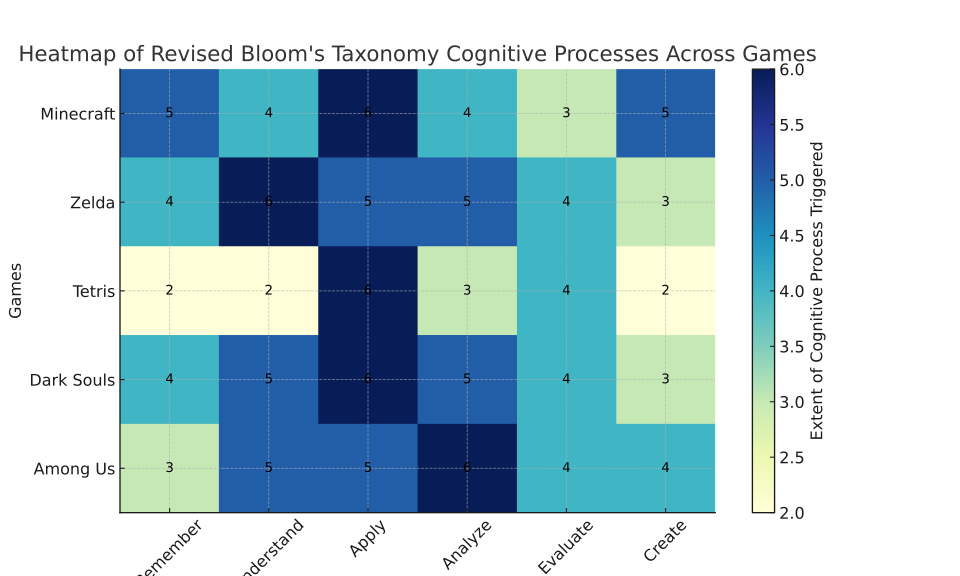
The analysis reveals that all games heavily emphasize the “Apply” cognitive process, as gameplay often revolves around executing tasks or mechanics such as building, solving, or reacting. Exploratory games like Minecraft and Zelda engage more with “Remember” and “Understand,” due to their nature of requiring players to recall and interpret elements like crafting recipes or environmental cues. Strategy-driven games such as Among Us and Dark Souls stand out in “Analyze” and “Evaluate,” challenging players to examine patterns, make decisions, and critically judge situations. The “Create” process is less dominant but appears strongly in games like Minecraft, which encourages creativity through building, and Among Us, where deception and fabrication play a crucial role, while structured games like Tetris or Dark Souls show less reliance on player-driven innovation. Games like Tetris focus more on procedural execution and efficiency, highlighting reactive gameplay over understanding or creativity. In contrast, complex games such as Zelda and Dark Souls demonstrate a balanced distribution across cognitive processes, offering a richer and more diverse player experience through layered challenges and engaging mechanics. This illustrates how different games cater to various cognitive skills, reflecting their design focus and player engagement strategies.